
Every day, students and staff at Indian Hills High School contribute to a carbon footprint that affects our planet. From the electricity we use in classrooms to the buses that bring us to school, our daily actions release harmful greenhouse gases into the air. Carbon footprints, the total amount of greenhouse gases that could accumulate with our daily actions, expressed in equivalent tons of CO2, have contributed to the impact our actions have had on the environment. Carbon footprints could be of individual students and teachers, industries, or countries as a whole.
Individual carbon footprints measure the amount you in particular contribute to the vast buildup of greenhouse gases, so the smaller your carbon footprint, the better. With one of the highest rates in the world, however, the United States holds the average carbon footprint per capita of 17.6 tons by the year 2023. Our country is nevertheless a representation of our school.
Ultimately, the release of greenhouse gases facilitates unwanted climate change. Greenhouse gases, including water vapor, carbon dioxide, methane, and nitrous oxide, have the ability to trap heat, resulting in the constant rise of Earth’s surface temperatures. In the year 2000, the global average surface temperature was 0.41ºC. However, by 2024, the global average surface temperature rose to 1.28ºC. The dramatic increase in the global average surface temperature started from the beginning of our human ancestry, and has been known as the global warming since the time of the Industrial Revolution. The erratic temperature changes prompt extreme weather, including floods, heat waves that cause droughts, and heavy downpours–all of which could heavily impact our school. Long and short term, climate change provokes events outside of school as well including ocean acidification, rising sea levels, mass species extinctions, food scarcity, and greater economic inequality.
Overall, our long-term lifestyle choices and habits at home and in school influence our carbon footprints. With all the students at Indian Hills High School, our collective carbon footprint is most likely high due to all the new technological innovations and activities we perform at school. Although a great decline of our school’s average carbon footprint can not happen overnight, small changes in our learning environment and strategies of transporting to and from school over a span of time may make our carbon footprint impact a whole lot less.
We can start with switching out all our ordinary and traditional lights for LEDs that are able to save electricity but stay bright while we study. Enhancing our building insulation and installing solar panels on our roofs or open areas near our school may help save energy and decrease our carbon footprint as well. Buses that pick up and drop off students in the mornings and during the afternoons also encourage the release of greenhouse gases that are detrimental to our air. Replacing those buses that run on gas with electric models and E-buses may spare our school the high expenses for gas and provide a cleaner and healthier trip to school or home.
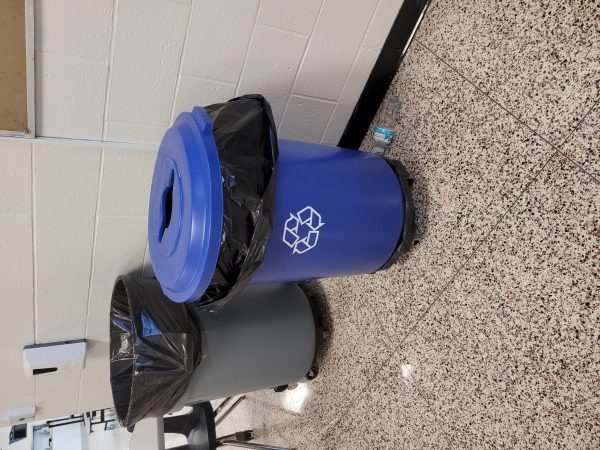
Without question, our cafeterias and parts of our school are scattered with regular black trashcans and blue recycle-cans; however, the garbage from both trashcans is ultimately not separated and ends up in one place. Resolving this issue and truly recycling what needs to be recycled would immensely help decrease our carbon footprint as a whole. Starting to compost food waste rather than throwing it in landfills with regular trash would likely shrink our carbon footprints, too.
In the end, all of these changes do not have to happen at once. Instead, gradually, if we began making different choices, we would have the ability to significantly lower our carbon footprint like many other schools have. These changes and improvements are not only limited to the school environment, but could apply to your home as well. It takes more than one to make a difference, and if we can start decreasing our carbon footprints in school, who knows where the trend of improving our environment could lead to in the future?