

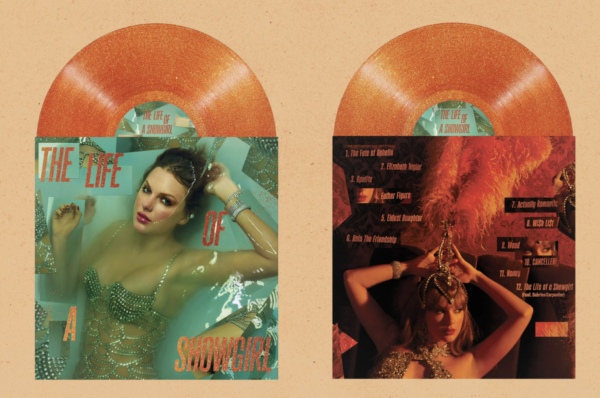
Within the past few years, singer, songwriter, and performer Taylor Swift has gone from a big pop artist to a worldwide superstar. The popularity of The Eras Tour and her sensational double album, The Tortured Poets Department, has earned her the title of the most prominent musician of the 21st century. However, this major success is coupled with the exploitation of Swift’s personal life, and it has sparked public attacks on her persona, musical inspiration, and beliefs. It has also given the public an unusually close look into her romantic relationships, including her breakup with actor Joe Alwyn and recent engagement to football player Travis Kelce. Swift’s twelfth album, The Life of a Showgirl, promised to delve into the triumphs and struggles that this level of fame brings. However, this album has been received terribly by both Taylor Swift haters and lifelong fans.
One of the issues with this album was the lack of cohesion under such a prominent theme. Coming from the worldwide phenomenon that was The Eras Tour, fans expected a glamorous, vibrant, and tragic tale of what it might mean to be under the spotlight at all times. With references and imagery involving old Hollywood stars and flapper girls, Swift was expected to delve into her own experiences with the euphoric but painful life of a performer. However, the music on this album did not have a natural flow, nor did it center around the roll out and promotion of the album.
For an album only twelve songs in length, all of the tracks were expected to play a vital role in the line of progression and the message of the album. But, the songs had nothing to do with one another and rarely explored the deeper meaning behind what it truly means to live the exploitative life of a showgirl. Teacher Mrs. Griffin says, “It was disappointing compared to her other music.”
In previous albums, Swift has done an excellent job at using different styles and premises of music to explore her overarching themes. For example, her 2017 album Reputation included both slow ballads and upbeat pop hits while still working through her main message for that specific album: leaving fame behind for personal connection. The Life of a Showgirl was quite the opposite, leaving the audience with a similar sound for every song but vastly uncoordinated lyrics. Considering it is not as lengthy as The Tortured Poets Department, which could possibly afford to discuss unrelated topics, songs like “Ruin The Friendship” and “Honey” had no place on this album. The ending title track, “The Life of a Showgirl,” felt like a rushed conclusion, leaving the listeners without any insight into the life of a showgirl.
Despite the clear objective failure of this album, there is also the loss of what was once a strong connection between Swift and her fans. Swift was once known as poetic, her biggest attribute being her ability to reach her audience with relatable and beautiful lyrics. One of the most significant reasons for her success was being able to incorporate insightful lyrics into fun beats and experiment with various genres. Many of the people who argue that this album is good say that people who do not like the album simply “hate fun” or do not want Swift to be happy in her personal life. However, Swift has crossed the line between fun pop and bad lyricism with this album. Swift has been happy in the past on albums such as Lover, and she seems to be having a lot of fun on albums like 1989, but she has never let it affect the quality of her writing.
Many of her fans have started to connect this to her relationship with Travis Kelce, Junior Daphne Bergel saying that she “blames Travis Kelce for dumbing down her lyrics.” It is clear that Kelce is very different intellectually from Swift’s previous partners and muses. It seems that the people she is surrounding herself with have begun to taint her writing style. For example, Hills student Elizabeth Conforti says, “She is trying to sound like Sabrina Carpenter, but she’s not Sabrina Carpenter.” Instead of embracing the lyricism that has worked in her favor for decades, Swift has begun to add suggestive lyrics to her songs, emulating Carpenter’s style of writing and performing. Here, Swift is trying to be something she is not, and it works against her to create an ingenuine tone.
Personally, I have followed Swift’s career since the release of Reputation, and I have seen her grow as an artist, but more importantly, as a person. This album feels drastically disconnected from her previous works and the ideals that she once stood so strongly upon, now waver in the spotlight. Her authenticity and sense of self seem to be lost in an attempt to sell more records and top the charts. Most of her lifelong fans, including myself, hope that this album was merely a fluke and that she will return to her previous style and level of lyricism. However, The Life of a Showgirl is now a permanent and disappointing member of Swift’s powerful discography.